Financial sovereignty starts here.
Aurora is a safe space to learn, explore, and start building the foundation for an abundant financial future with decentralized finance. No jargon necessary.

The confidence gap,
not the capability gap.
In Europe, women are significantly behind when it comes to investing. The structural barriers are real: historical exclusion from financial systems, the "finance bro" culture of crypto, and longer lifespans with lower lifetime earnings. Most finance apps don't address any of this. They assume users are already convinced. The problem isn't aptitude or appetite. It's access.
- 4.1/5average onboarding score across 8 participants
- 88%of testers opted in for follow-up after testing
- 8participants spanning zero crypto knowledge to experienced Ledger and MetaMask users
"It doesn't feel very crypto bro, which is nice. It's not cluttered or bare bones, just minimalistic in a nice way.
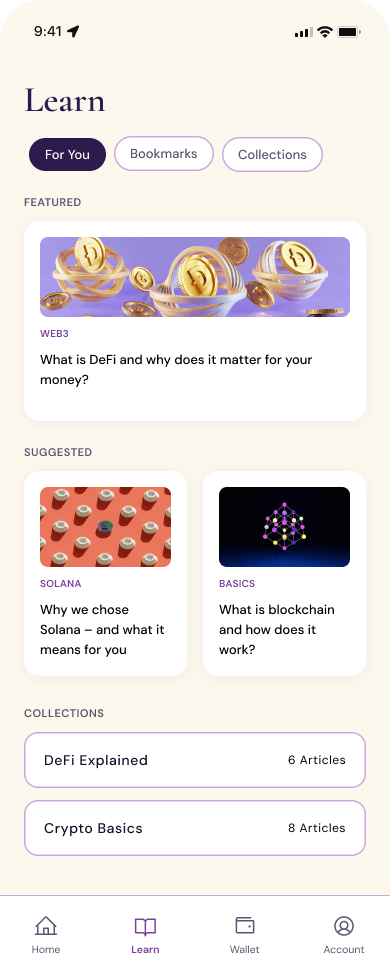
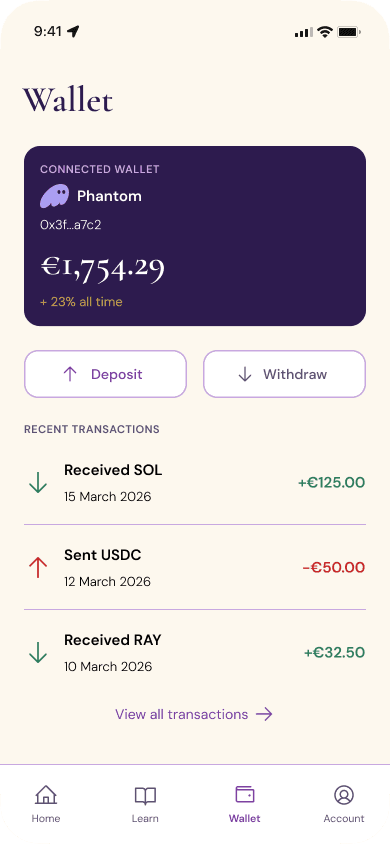
It felt a lot calmer, and less overwhelming compared to other financial apps where you need to look up everything.Tester, Berlin
Process
How it actually happened.
The process, condensed.
01 — Research
Two rounds, ten survey participants, two interviews, 17 prototype testers.
02 — Synthesis
Obsidian, themes, tensions, and a product direction that changed completely.
03 — Design
21 hi-fi screens, a full component library, one logo built from scratch.
04 — Build
Next.js, TypeScript, and Claude Code. Design decisions tested in real code.
A product that earns trust
before it asks for anything.
What it became
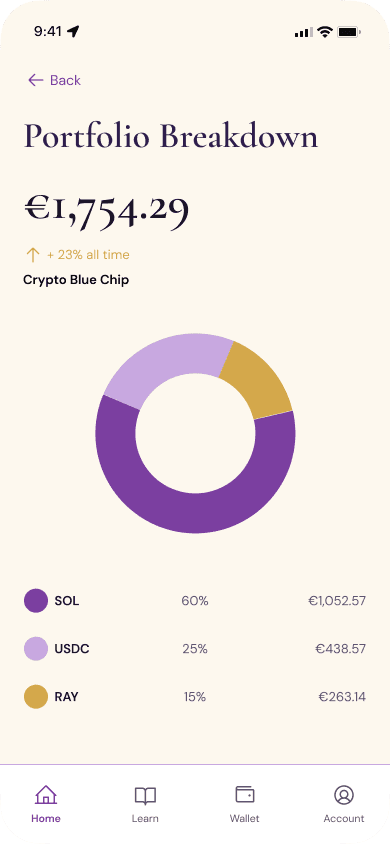
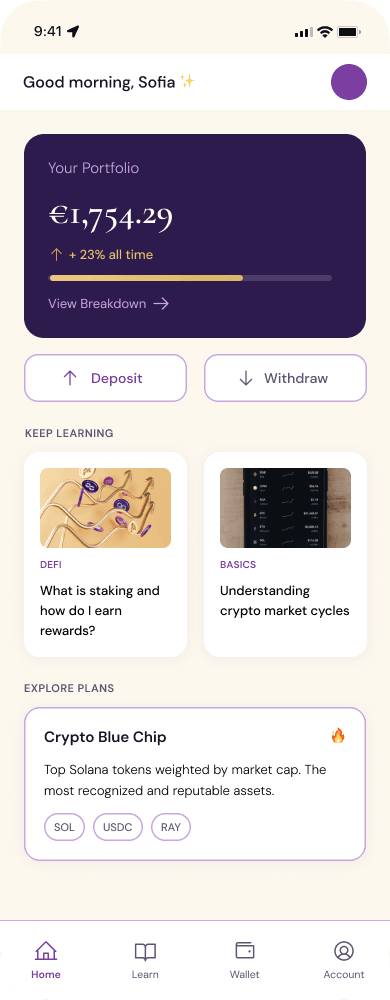
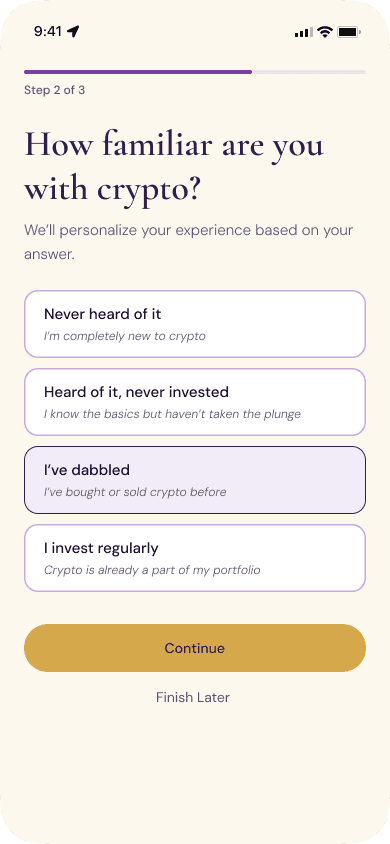
- 21 screensacross onboarding, portfolio, education, and community flows
- Risk pill systemplain-language chips for communicating risk levels, being refined in v2 to replace flame icons with clearer text labels
- Guest view flowa way to explore the dashboard and browse learning content before creating an account or handing over any data
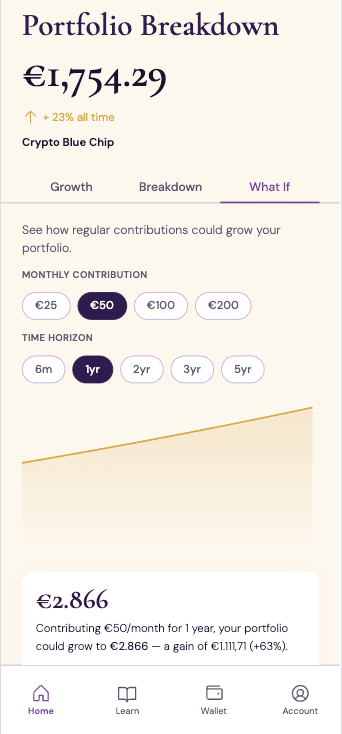
- What If simulatora scenario tool letting users explore growth outcomes before committing any real money
- Sustainability lensSolana's energy efficiency and carbon neutrality surfaced at relevant moments in the experience, not bolted on as an afterthought
What I learned
- The confidence gapevery participant understood investing conceptually — the barrier was emotional readiness, not capability
- Education before transactionleading with learning before asking anything of the user became the product's core design principle
- Design reveals what Figma doesn'tthe Figma-to-code workflow surfaced layout and architecture decisions that static designs couldn't predict
- Research shapes featuresthe What If simulator came directly from a conversation with a research participant. Her framing, not mine.
- Research changes youDuring the initial research phase, one participant told me: "I really like the way you think. I wish I could hire you." That kind of feedback doesn't just validate the work. It reminds you why the work matters.
The most important design decision wasn't a component or a color. It was the choice to treat education not as a hurdle before the product. It is the product itself.